Elton Freitas Português

Elton Freitas

I study how firms, productive capabilities, market structures and production networks shape the economic transformation of cities and regions, and how industrial and place-based policies can foster productivity, diversification and inclusive development.

  • Postdoctoral Researcher, Center for Collective Learning, IAST, Toulouse School of Economics
  • Associate Professor of Economics, Federal University of Sergipe (UFS)
  • Visiting Researcher, CEDEPLAR, Federal University of Minas Gerais
561 citations on Google Scholar

h-index 12 · i10-index 13
updated

Portrait of Elton Freitas

Research

One question runs through my work: why do some regions develop new capabilities, firms and activities while others stay locked into fragile paths, and which policies can change that? I combine Brazilian administrative microdata (RAIS, SECEX, CAGED), modern causal identification and economic complexity, used as a mechanism rather than as an index.

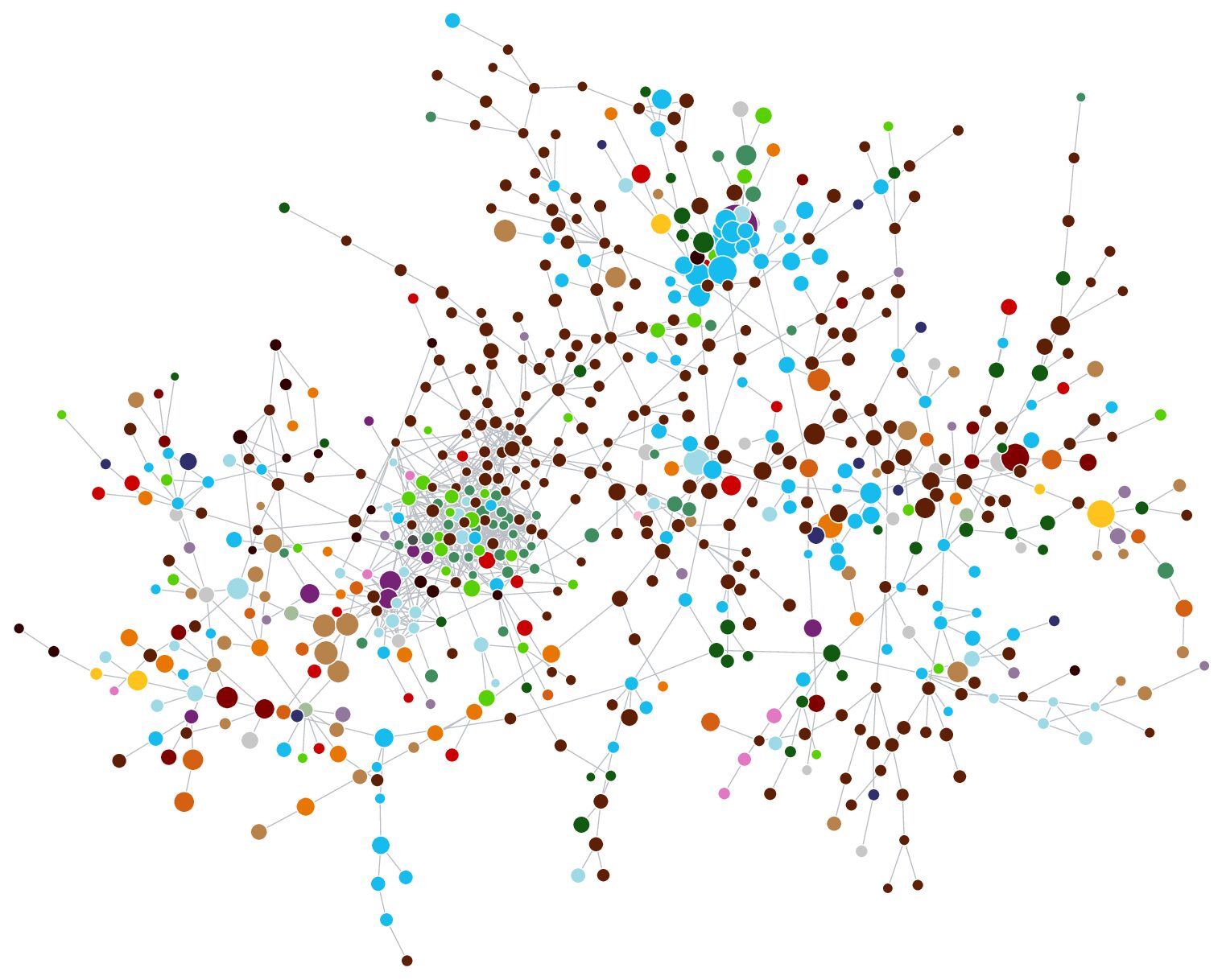
A network of several hundred coloured dots joined by thin grey lines. A dense core of manufacturing industries sits at the centre left, with branches of trade, services and agriculture spreading outward.
Figure 1. The co-location industry space of Brazil. Two industries are linked when they tend to appear in the same places. Colours mark the 21 sections of the national industry classification (CNAE): processing industries in dark brown, trade in blue, agriculture in green. Work in progress with RAIS microdata.

Microfoundations of economic complexity

Where do relatedness and economic complexity come from? I derive the link between a region and an activity from a matching function with frictions: the O-Ring form appears as the joint probability that tasks are matched, and Hidalgo's capability model is the frictionless limit.

In progress
Working paper in preparation at the Center for Collective Learning.
Builds on
Papers in Regional Science 2024, EconomiA 2024, Cambridge Journal of Economics 2017, CEPAL Review 2019

Industrial policy, suppliers and regional development

Do large investments and industrial instruments, such as subsidised credit, tax incentives and public procurement, build lasting local capabilities and suppliers, or only a temporary expansion?

Published
Spatial Economic Analysis 2024, CEPAL Review 2024
Applied work
DataViva, the Sergipe textile chain, strategic sectors for Belo Horizonte.

Green transition and regional capabilities

Which Brazilian regions have the capabilities to enter green activities such as lithium, hydrogen and the bioeconomy, and which workers face the highest transition costs?

Published
World Development 2025
In progress
Green and inclusive smart diversification strategies; lithium batteries in Brazil.

Publications

  1. 2026
    Economic complexity and local employment multipliers Queiroz, A., Freitas, E. and Romero, J. P. Structural Change and Economic Dynamics 76: 20-43. Cited by 2
  2. 2025
    Economic complexity and deforestation in the Brazilian Amazon Silveira, F., Romero, J. P., Queiroz, A., Freitas, E. and Stein, A. World Development 185: 106804. Cited by 27
  3. 2024
    Related industries, economic complexity, and regional diversification: an application for Brazilian microregions Freitas, E., Britto, G. and Amaral, P. Papers in Regional Science 103: 100011. Cited by 49
  4. 2024
    Complexity-based diversification strategies: a new method for ranking promising activities for regional diversification Romero, J. P., Freitas, E., Silveira, F., Britto, G., Cimini, F. and Jayme Jr., F. Spatial Economic Analysis 20(4): 640-663. Cited by 28
  5. 2024
    Determinants of tourist employment in Brazilian microregions: a dynamic panel data approach Ribeiro, L. C., Santos, F., De Moura, F., Montenegro, R. and Freitas, E. Journal of Regional Science 64: 1622-1646. Cited by 9
  6. 2024
    Relatedness and regional economic complexity: good news for some, bad news for others Queiroz, A., Romero, J. P. and Freitas, E. EconomiA 25: 264-288. Cited by 26
  7. 2024
    Smart diversification strategies differentiated by countries' complexity Lopes, C., Romero, J. P. and Freitas, E. CEPAL Review 143: 127-147. Cited by 3
  8. 2023
    Economic complexity and employment in Brazilian states Queiroz, A., Romero, J. P. and Freitas, E. CEPAL Review 139: 177-196. Cited by 27
  9. 2019
    The great divide: economic complexity and development paths in Brazil and the Republic of Korea Britto, G., Romero, J. P., Freitas, E. and Coelho, C. CEPAL Review 127: 191-213. Cited by 104
  10. 2017

Doctoral thesis: Related industries, economic complexity and regional diversification: an application for Brazilian microregions, CEDEPLAR/UFMG, 2019. Working papers, book chapters and conference papers are listed on Google Scholar and Lattes.

Ongoing projects

  • Microfoundations of economic complexity Postdoctoral research · 2026-2027 Center for Collective Learning, IAST, Toulouse School of Economics.
  • Lithium batteries in Brazil: markets, impact and feasibility of a plant Researcher · since 2025 Market study and impact and feasibility analysis of a low-voltage lithium battery plant. SENAI/PE, Rota 2030 programme.
  • Observatory of the New Industry Brazil in the Northeast Coordination, with UFCG · 2026-2027 Work plan for the DataNordeste panel of socioeconomic and environmental data. SUDENE.
  • Textile supply chain in Sergipe Coordinator · 2024-2026 Diagnosis of the state's textile chain, a survey of 67 firms and policy recommendations. FAPITEC/SE.
  • Regional development and vocational training in Sergipe Coordinator · since 2024 Regional demand, productive arrangements and the supply of vocational education. FAPITEC/SE.
  • Evaluation of ISCON, the Sebrae small business confidence index Coordinator · since 2024 Assessment of the index methodology for Sebrae/MG.
  • Green and inclusive smart diversification strategies Member · since 2024 Coordinated by João Prates Romero, CEDEPLAR/UFMG.
  • Economic complexity and smart specialisation Member · since 2024 A policy and planning tool for productive diversification. Coordinated by Gustavo Britto, funded by CNPq.
  • DataViva: productive development and social transformation Member · since 2024 Expansion of the open data platform dataviva.info. Coordinated by Gustavo Britto, funded by FAPEMIG.

Awards

  • 2026
    FIEMG Economics Prize, 2nd placeWith Yasmin Nery Santos and Gustavo Britto. Federation of Industries of Minas Gerais.
  • 2026
    Paper Prize in Industrial Economics and Innovation, 2nd placeBrazilian Association of Industrial Economics and Innovation (ABEIN), X ENEI.
  • 2020
    UFMG Thesis Award, best thesisGraduate Programme in Economics, Federal University of Minas Gerais.
  • 2015
    CNI Economics Prize, 1st placeBrazilian Industry category. National Confederation of Industry.
  • 2015
    19th Banco do Nordeste Regional Economics Prize, 3rd place
  • 2012
    CNI Economics Prize, 1st placeNational Confederation of Industry.
  • 2012
    17th Brazil Economics Prize, 2nd placeFederal Council of Economics (COFECON).
  • 2012
    16th Regional Economics Prize, 3rd placeMaster's dissertation category. Banco do Nordeste and ANPEC.
  • 2009
    Magna Cum LaudeFederal University of Ceará.
  • 2008
    12th BNB Regional Economics Prize, 2nd placeProfessional category. Banco do Nordeste.
  • 2008
    Germana Amaral de Morais Prize, 1st place27th Scientific Initiation Meeting, Federal University of Ceará.

Teaching

I teach Regional Economics and Industrial Economics in the undergraduate programme and the Graduate Programme in Economics (PPGE) at UFS, and supervise student research.

Class notes and teaching datasets will be posted on this page. Code for computing economic complexity indicators is on GitHub: econcomplex.

Contact

Sergipe

Department of Economics
Federal University of Sergipe
São Cristóvão, Sergipe, Brazil

Toulouse

Center for Collective Learning
IAST, Toulouse School of Economics
Toulouse, France
Elton Freitas on the steps of a brick building